To prevent basement flooding before spring storms, work through five areas: move roof and sump water well away from the foundation, test the sump pump and its backup, check the floor drain and any backwater valve, lift valuables off the basement floor, and confirm your insurance covers sewer backup. Most of it takes an afternoon and a bucket. The checklist below is written for DuPage County houses, where heavy clay soil, a high spring water table and older combined sewers make April and May the riskiest months for a basement.
If you find a problem you cannot fix yourself, call (858) 363-8298 and we will send the nearest available plumber.
Start with last year's water: where did it get in?
If the basement took water before, where it showed up tells you which part of this checklist to do first. Look for tide lines on drywall and stains on the bottoms of boxes.
| Where the water showed up | What it usually means | Start with |
|---|---|---|
| A damp band at the base of a wall or along the wall-floor joint | Soil against the foundation soaked faster than the drain tile can carry it off | Outside the house, then the sump pit |
| Water below a basement window | A window well that filled like a bucket | Window wells (see the FAQ on covers) |
| Water spreading out from the sump pit | The pump stopped, lost power or could not keep up | The sump pit and its backup |
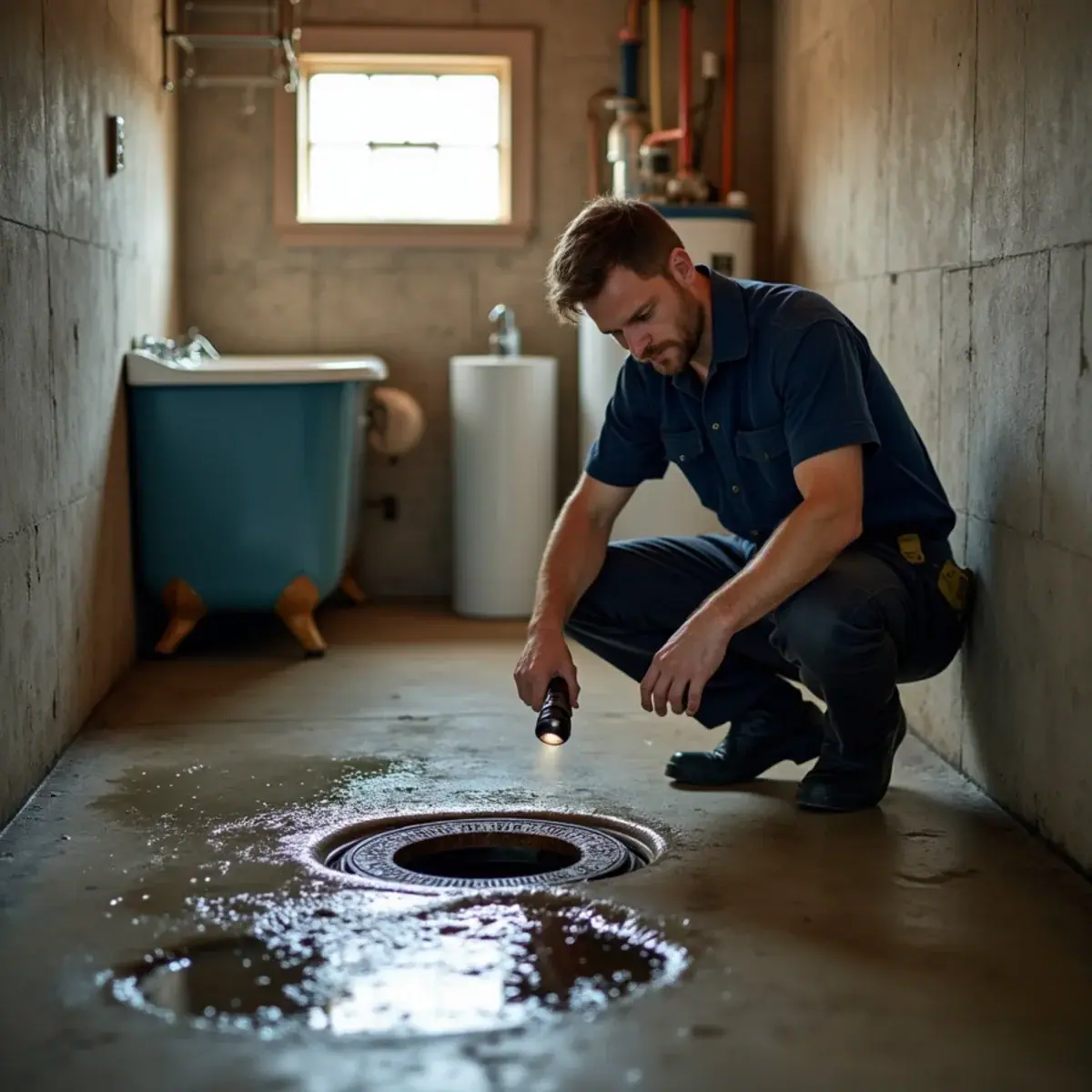
| Gray, smelly water around the floor drain | A surcharged sewer or a blocked lateral | Floor drains, backwater valves and the lateral |
| One wet spot under a pipe or the water heater, rain or not | A plumbing leak, not the storm | A plumbing repair visit |
Outside the house: gutters, downspouts and grading
- Clear gutters of maple seeds and leaves so water does not spill over next to the foundation.
- Extend every downspout several feet from the house onto ground that slopes away, and check that none drain into the sanitary sewer.
- Walk the sump discharge line from the house to its outlet. Remove any ice plug left from winter and make sure the end is clear.
- Fill low spots along the foundation so water runs away from the house instead of toward it. As a yardstick, the residential building code asks new homes for at least 6 inches of fall in the first 10 feet out from the foundation.
- Clean window wells and fit covers on wells that collect rain.
Villa Park prohibits connecting downspouts and sump pumps to the sanitary or combined sewer. Water sent into the sewer adds to the surcharge that backs up into basements on your block, including yours.
The sump pit: test the pump, the float and the backup
- Check that the pump is plugged into a working GFCI outlet, not an extension cord.
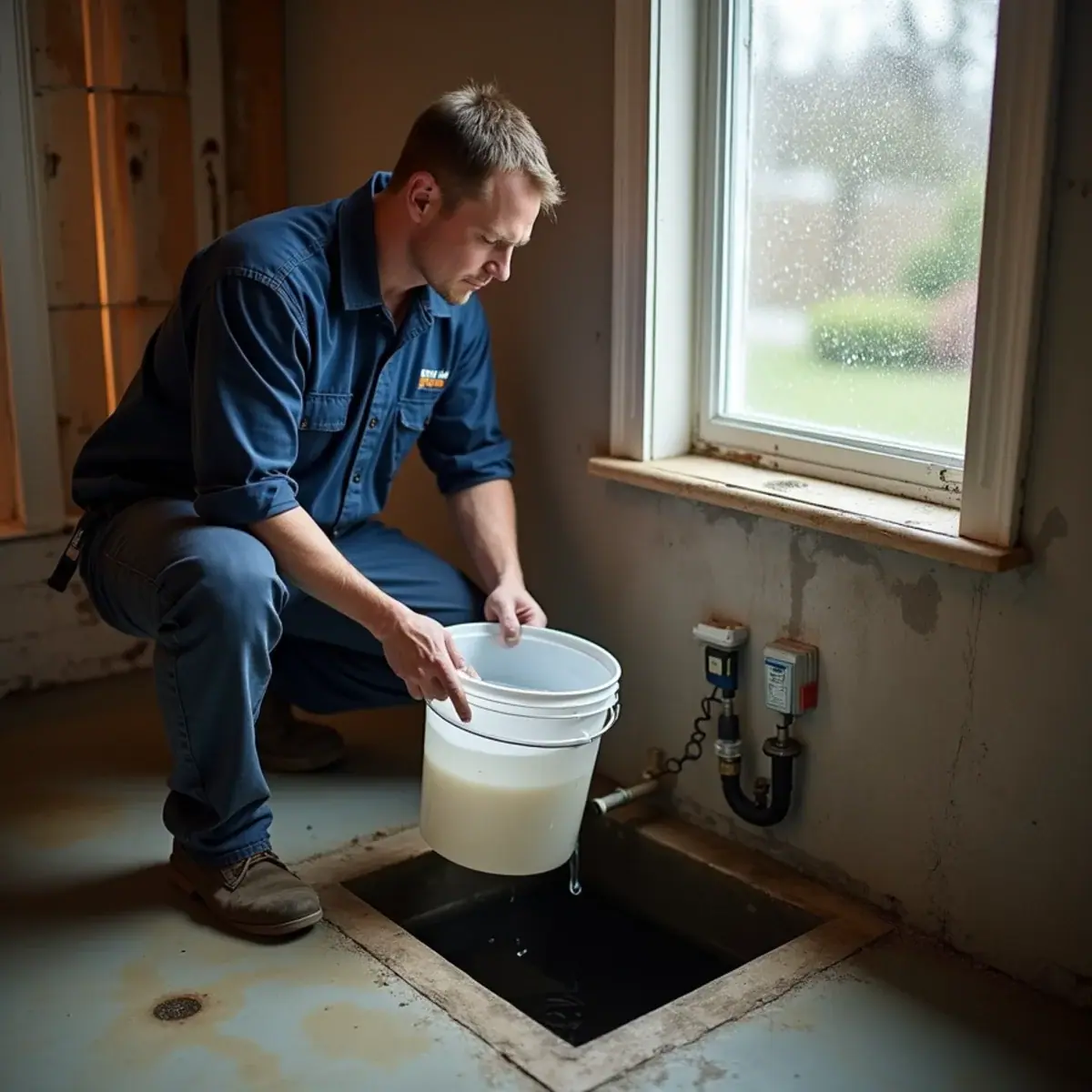
- Slowly pour a five-gallon bucket of water into the pit. The float should rise, the pump should start, and the pit should empty in under a minute.
- Listen as it shuts off. A rush of water falling back into the pit points to a failed check valve.
- Unplug the primary pump and repeat the test to make sure the battery backup starts. Check the battery date and charge indicator.
- Clear gravel, silt and debris from the pit and intake screen with the pump unplugged.
If the pump is past roughly seven to ten years old, hums without moving water or cycles constantly, deal with it now rather than during a storm. Our guide to a sump pump running constantly, or not at all covers the 8 most common causes, and our sump pump repair and battery backup service handles replacements.
Floor drains, backwater valves and the sewer lateral
A sump pump handles groundwater. Sewage coming up the floor drain is a different problem, caused by a clogged lateral or a village sewer that surcharges in heavy rain. Check both before the season:
- Pour a bucket of water down the floor drain. It should drain freely without gurgling.
- If you have a backwater valve, open the access cover and make sure the flap moves freely and is not held open by debris.
- If you have an overhead sewer, test the ejector pump the same way you test a sump pump.
- If your clay lateral has needed rodding before, schedule it before spring rather than after the first backup.
Root-prone laterals are common under older parkway trees here; our article on tree roots in a clay sewer line explains when rodding is enough, and our drain cleaning and sewer rodding service does the work. For homes that back up in every big storm, a permanent fix through basement flood control, with overhead sewers and backwater valves, is worth pricing before the season rather than after.
Inside the basement: protect what water can reach
- Move boxes, photos and documents onto shelves or into sealed plastic bins off the floor.
- Put an inexpensive water alarm near the sump pit and another near the floor drain.
- Keep the area around the water heater, furnace and floor drain clear so a plumber can reach them.
- Make sure everyone in the house knows where the main water shut-off and the electrical panel are.
Never step into a flooded basement with the power on
If water reaches outlets, cords or appliances, stay out and shut off power at the panel only if you can reach it from a dry spot. Otherwise call the utility. Gas appliances that have been under water need to be checked before they are relit.
Paperwork: insurance and village programs
Take photos of your finished basement and belongings now, while everything is dry. Then read your homeowners policy: standard policies usually exclude sewer backup unless you added an endorsement. Our guide to whether homeowners insurance covers sewer backup in Illinois explains what to ask your agent.
Villa Park's Home Flood Prevention Reimbursement Program reimburses 50% of the lowest qualified estimate, plus the permit cost, in three tiers: an overhead sewer up to $5,000; a backflow valve or sanitary lateral replacement up to $3,500 per application; and disconnecting downspouts, sump discharges and footing drains from the sanitary sewer up to $1,500. Check current terms, confirm eligibility with Public Works, and apply for eligibility before starting work. Our walkthrough of the Villa Park reimbursement program covers the steps.
Local notes for Addison, Westmont and Villa Park homes
Addison
Homes on the low ground near Salt Creek see some of the hardest-working sump pumps in the county. Many Addison houses from the 1960s to the 1990s are on their second or third pump, so a battery backup is worth serious thought there.
Westmont
A large share of Westmont homes are condos and townhomes. Ask your association who maintains shared sump and ejector pumps and when they were last tested, and check that your own unit's drains and shut-off valves are accessible.
Villa Park
Parts of the village are still on combined sewers being separated block by block, as in the Washington Street area and the Biermann Avenue project. Until your block is separated, floor drain backups in heavy storms remain a real risk. On April 17 and 18, 2013, observers measured 7.26 inches of rain near Elmhurst, and the National Weather Service storm log records flooded basements near Elmhurst and flooded basements and first floors in Lombard.
When the storm arrives
Watch alerts from the National Weather Service Chicago office. During heavy rain, hold off on laundry, dishwashers and long showers so you are not adding to a strained sewer. Check the sump pit every hour or two. If water starts coming up the floor drain, follow our steps for what to do when sewage backs up into the basement.
After the storm passes
- Check the sump discharge outlet outside: a pump that runs while the outlet stays dry has a blocked or broken line.
- Recharge or check the battery backup if it ran during an outage.
- Note any new damp spot and match it to the table at the top of this checklist.
- If the floor drain gurgled or seeped, book rodding or a camera inspection while the weather is dry.
Questions we hear about this
How often should I test my sump pump?
At least twice a year, in early spring before the storm season and again in the fall. Fill the pit with a bucket of water until the float lifts, and confirm the pump kicks on, drains the pit and stops by itself. Test the battery backup at the same time by unplugging the primary pump, and swap the battery when its maker says to.
Is it worth adding a battery backup sump pump before storm season?
If your pit takes in water during most storms, yes. Spring storms often knock out power exactly when the pump is working hardest, and a primary pump on a dead circuit protects nothing. A battery backup covers many outages, though a long one can outlast the battery, and it also covers you if the primary pump fails mechanically.
Should I plug my floor drain before a storm?
A floor drain plug or standpipe can hold back a small surcharge, but it is not a fix. Pressure can push sewage out a basement toilet, shower or laundry tub instead, and a plugged drain cannot carry away water from a leak. For homes that back up regularly, an overhead sewer or backwater valve is the lasting answer.
Can I run my sump pump on a portable generator?
Yes, if the generator stays outdoors. The CDC says never to run one inside a home, garage or carport and to keep it at least 20 feet from doors and windows, because the exhaust carries carbon monoxide. Run a heavy-duty outdoor extension cord to the pump and keep a battery-powered CO alarm working inside.
Should I put covers on my basement window wells?
On wells that collect rain or leaves, yes. A clear cover sheds water and still lets light in, and the gravel at the bottom should let water drain away. If the window is the escape route from a basement bedroom, the cover must open from inside without a key, tool or extra force, which the residential building code requires for escape windows.