Usually not, unless you added coverage for it. Most standard homeowners policies sold in Illinois exclude water that backs up through a sewer or drain. Coverage typically comes from a separate water backup endorsement (often called a sewer backup rider) with its own limit and deductible. Flood insurance through the National Flood Insurance Program is a different policy again, and it generally pays for sewer backup only when an outside flood causes it directly.
Policies differ, so treat this as general information, not insurance or legal advice. Read your own declarations page and ask your agent the questions below before the next storm season. The Illinois Department of Insurance also answers consumer questions about how policies work.
Why a standard homeowners policy usually excludes sewer backup
Homeowners policies are built around sudden, accidental water damage from inside the house: a burst supply line or a washing machine hose that splits. Water entering from outside, whether a surcharged village sewer or rising groundwater, is usually carved out in a separate exclusion.
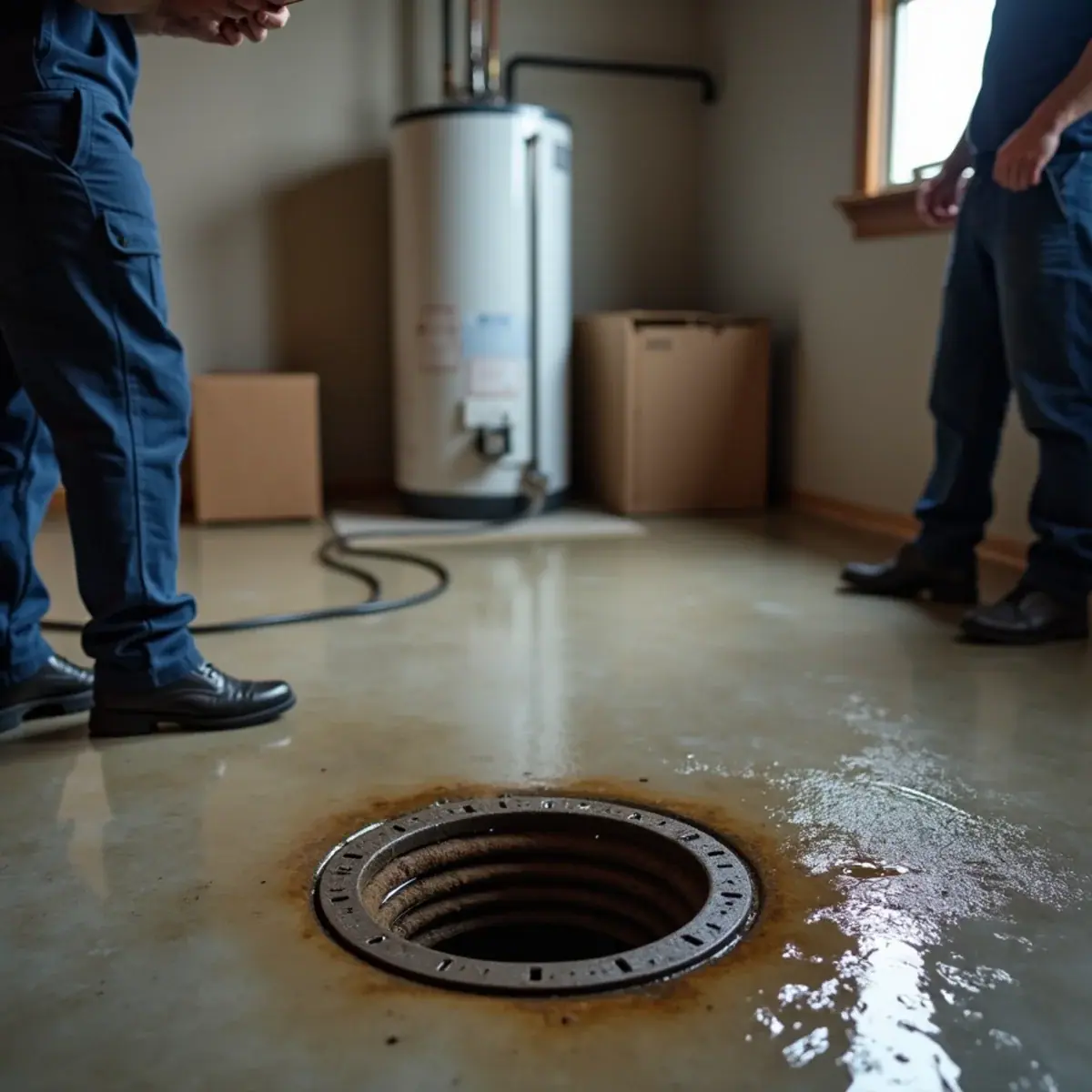
That matters in eastern DuPage County, where parts of Villa Park and Lombard still run on combined sewers. In a heavy storm the main fills with rainwater and sewage, pressure rises, and the lowest opening it can find is often a basement floor drain. Without an endorsement, that damage and the cleanup usually fall on the homeowner.
Sewer backup endorsements: what they usually cover
A water backup endorsement is an add-on to the homeowners policy. Wording varies by company, but it commonly covers damage from water or sewage that backs up through sewers or drains, and often water that overflows from a sump pit when the pump fails. When you review yours, check:
- The limit. Backup endorsements often carry a much lower limit than the main policy, which may not match the value of a finished basement.
- The deductible. It may be separate from your regular deductible.
- Sump pump failure. Some endorsements include sump overflow and some do not.
- What is excluded. Many endorsements pay for resulting damage but not the repair of the pipe or pump that failed.
- Seepage. The Illinois Department of Insurance's own definition of backup coverage notes that water seeping through walls or the floor is not covered.
- Mold. The Department warns that mold after a backup may be excluded or capped, one more reason to dry the basement within 24 to 48 hours.
Illinois law makes this easier to find out. Under section 143.21d of the Illinois Insurance Code, an insurer must give every homeowners applicant information on whether sewer backup and sump overflow coverage is available, with its limits and cost. If you never noticed it, ask your agent.
How to size the limit before you choose one
Before you accept a default limit, list what the first foot of water would reach:
- Finished flooring and pad, baseboards, and the lower drywall and insulation, which usually come out after a backup.
- Furniture, rugs, electronics and anything stored on the floor.
- Appliances that sit at floor level: washer, dryer, chest freezer, dehumidifier.
- Extraction, drying and debris removal, then rebuilding the finished space.
Put a replacement value next to each line, then ask whether cleanup counts against the same limit. Photos of the finished space, taken now while it is dry, back up the list later; the spring storm basement checklist includes that step.
Flood insurance (NFIP) is a different policy
Flood insurance covers surface water from outside the house: a creek over its banks or rain sheeting across yards and into window wells. Most of it is written through the National Flood Insurance Program run by FEMA. Homes near Salt Creek or Sugar Creek may be in or close to a mapped flood zone, but homes outside one can buy it too. FEMA defines a flood as a general and temporary condition of water covering 2 or more acres of normally dry land, or 2 or more properties, one of which is yours. A backup confined to the sewer, with yards and streets dry, usually falls outside that definition.
Two limits matter for basements. NFIP policies generally pay for sewer backup only when a general flood condition directly causes it, not when a storm simply overloads the sewer on your street. And coverage below ground level is restricted to a list of items such as furnaces, water heaters and some appliances, not finished walls or stored belongings. New policies also usually have a waiting period before they take effect, typically 30 days from purchase according to FEMA and the Illinois Department of Insurance, so buying when a storm is already in the forecast is too late. Ask, too, how your lower level is classified: the NFIP counts as a basement any floor below ground level on all sides, so a split-level or walk-out may be treated differently.
| Situation | Standard homeowners | With backup endorsement | NFIP flood policy |
|---|---|---|---|
| Sewage backs up through a floor drain in a storm | Usually excluded | Usually covered up to the endorsement limit | Generally only if a flood caused it directly |
| Sump pump fails and the pit overflows | Usually excluded | Often covered; check wording | Generally not |
| Creek or surface water pours in through a window well | Usually excluded | Usually not | Covered, with basement limits |
| Supply pipe bursts inside the house | Usually covered | Not needed | Not a flood |
| Repairing a root-filled or cracked sewer lateral | Usually excluded | Usually excluded | Not covered |
What insurance rarely pays for: the sewer line itself
Even with an endorsement, the pipe that caused the backup is usually on you. Policies treat root intrusion, cracked clay joints and slow deterioration as wear and tear. Some insurers sell a separate service line endorsement for buried pipes; ask whether yours does and what it excludes.
If a camera inspection shows roots or an offset joint in your lateral, the fix is a plumbing job, not a claim. Our guide to tree roots in a clay sewer line explains the options, and our sewer line repair service covers camera inspection, lining and replacement.
If your basement backs up: documenting the damage
- Stop using water in the house so you are not adding to the backup.
- Photograph and video the water, the floor drain and damaged items before cleanup starts.
- Call your agent or insurer early and ask what they need, including whether they want to inspect first.
- Keep the plumber's written findings, such as a camera recording showing whether the village main surcharged or your own lateral was blocked.
- Save receipts for cleanup, drying and emergency repairs, and take reasonable steps to limit further damage.
For the hour-by-hour steps, see what to do when sewage backs up into your basement.
Questions we hear about this
Does flood insurance cover sewer backup?
Generally only when a flood directly causes it. NFIP policies are written for surface flooding from outside, and a sewer backup caused by a storm overloading the village main, with no general flood in the area, is usually not covered. A water backup endorsement on your homeowners policy is the usual way to cover that risk.
Will homeowners insurance pay to repair my sewer line?
Usually not. Roots, cracked clay joints and deterioration count as wear and tear under most policies, even when a backup endorsement pays for the resulting damage. Some insurers offer a separate service line endorsement for buried pipes. Check your policy and ask your agent exactly what it includes.
Is a sump pump failure covered by insurance?
It depends on the endorsement. Many water backup endorsements include water that overflows from a sump pit when the pump fails, but some exclude it or set a lower limit. A standard policy without an endorsement usually excludes it. Read the endorsement wording and confirm with your agent before storm season.
Do I need flood insurance if I already have a sewer backup endorsement?
Possibly, because they cover different water. The endorsement handles sewage or sump water coming up from inside; flood insurance handles surface water coming in from outside, such as a creek over its banks or rain pouring through a window well. Check your address on FEMA's Flood Map Service Center, and if your lot sits low, ask your agent about both.
Does renters insurance cover sewer backup?
Usually only if the policy includes or adds backup coverage, so check the wording. A renters policy covers your belongings, not the building; the owner's policy covers walls, floors and fixtures. If you rent a lower-level unit, for example in one of Westmont's condo and apartment buildings, ask your agent before storm season.