If sewer water is coming up through your basement floor drain, do three things right now: stay out of standing water near outlets or appliances, stop using every sink, toilet, shower and washer in the house, and call (858) 363-8298 so we can send the nearest available licensed plumber. Everything you pour down upstairs ends up on the basement floor.
After that, the next 30 minutes are about keeping people safe, limiting damage and figuring out whether the problem is a clog in your own sewer line or an overloaded village sewer. The steps below are in the order a plumber would want you to take them.
Minutes 0 to 5: Safety before anything else
Water and electricity
Do not step into water that is touching outlets, extension cords, a freezer, a dehumidifier or the furnace. If you can reach the breaker panel without walking through water, shut off the basement circuits. If you cannot, stay upstairs and leave the power to a professional.
Sewer backup water is raw sewage, even when it looks like clear storm water. Keep children and pets upstairs, and if you have to go down, wear rubber boots and waterproof gloves. Wash your hands and anything you touched with hot soapy water afterward.
Most Villa Park basements hold a gas water heater and a gas furnace. If the water has reached their burners or controls, do not try to relight anything. If you smell gas, leave the house and call Nicor Gas or 911 once you are outside. Under FEMA's flood guidance, a furnace or water heater that sat in backup water stays off until a licensed technician cleans and checks it.
Minutes 5 to 15: Stop adding water to the drain
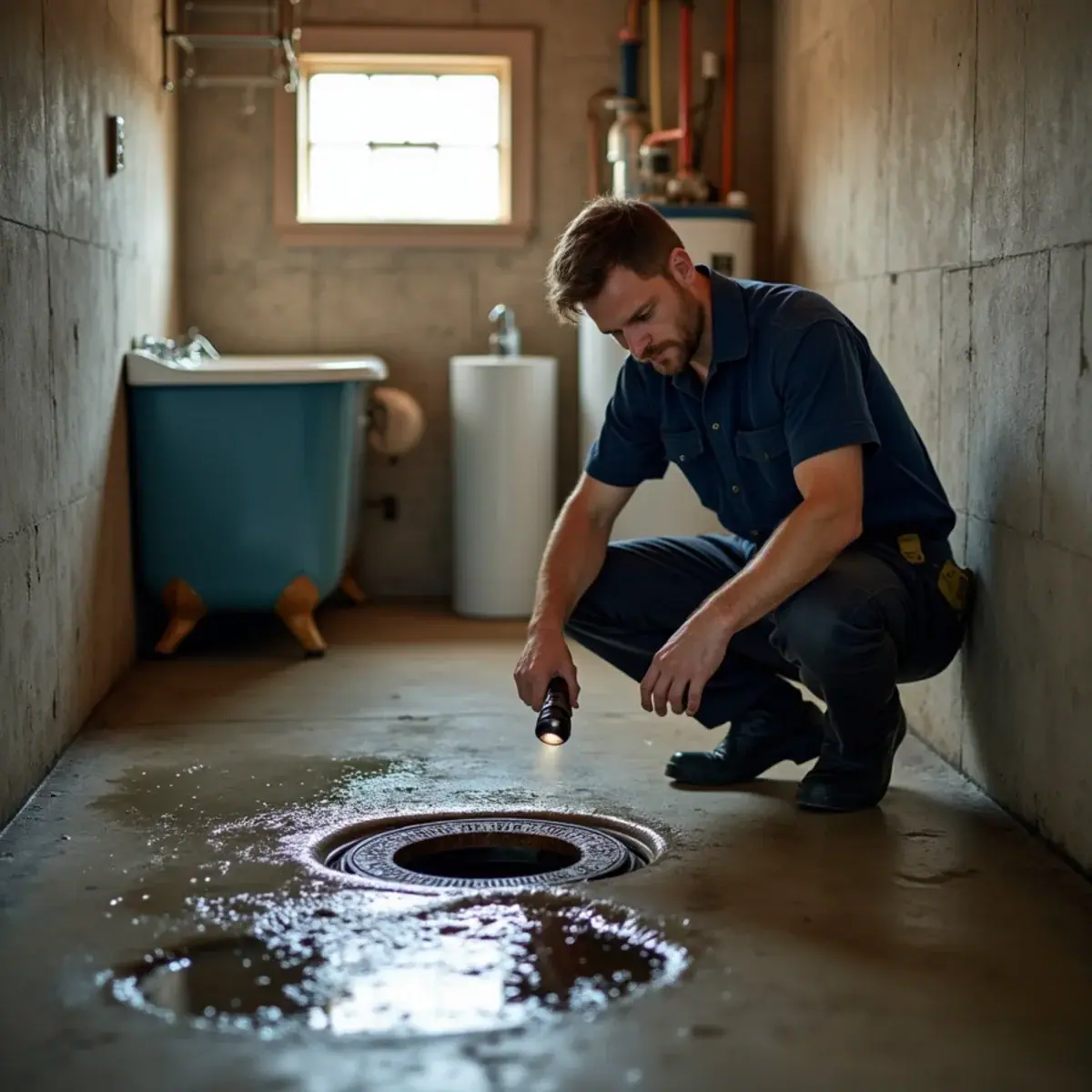
A basement floor drain is usually the lowest opening on the house sewer, so it is where the overflow shows up first. Every gallon you send down the drains upstairs has to go somewhere, and when the line is blocked or the main is full, it comes back out downstairs.
- Stop flushing toilets and tell everyone in the house.
- Turn off the dishwasher and the washing machine mid-cycle if you have to. Washer discharge is one of the biggest single slugs of water a house sends.
- Do not run the shower or tub.
- If your sump pump empties into the laundry tub or a floor drain, unplug it, but only if you can do so without standing in water. Villa Park prohibits sump connections to the sanitary sewer, yet some older homes still have them.
Do not pour drain cleaner into a backed-up floor drain. It rarely reaches a blockage in the main line, and it makes the water caustic for you and for the plumber who has to open the line.
Leave the cleanout cap on
Don't unscrew the floor drain plug or the cleanout cap on the main to "let it drain". On a full line, all the water standing in the pipes above that opening comes out at once. Let the plumber open it slowly, wet vac ready.
Minutes 15 to 20: Is it your line or the village sewer?
The answer changes what happens next, and you can usually tell from two clues: the weather and your neighbors.
| What you see | Likely cause | What helps |
|---|---|---|
| Backup during or right after a heavy storm, neighbors also flooding | Surcharged sewer main, often a combined sewer carrying storm water and sewage | Wait for the main to drop, then long-term flood control |
| Backup on a dry day, only your house, toilets gurgle or drain slowly | Blockage in your own lateral: tree roots, grease or a broken clay pipe | Rodding the main line, then a camera inspection |
| Water only when the washer drains | Partial blockage in the lateral or house drain | Rodding before the next full load |
Parts of Villa Park still run on combined sewers that the village has been separating block by block. In a hard storm those mains fill up and push water back into any basement fixture that sits below street level. On a dry day, the usual suspect is a clay tile lateral from the 1950s with roots growing through the joints. Report storm backups to the village public works department so they know where the main is surcharging. Villa Park does not take sewer backup reports through its online request form: call Public Works during weekday business hours, and after hours call 911, where the dispatcher alerts the on-call Public Works supervisor.
Minutes 20 to 30: Limit the damage and document it
- Take photos and video of the water, the floor drain and anything wet before you move it. Your insurance company will ask.
- Move dry items off the floor and away from the water line if it is safe to reach them.
- Open basement windows if the weather allows, to vent the smell and humidity.
- Write down when the backup started, whether it was raining and whether it stopped on its own.
- Call your insurance agent early. Sewer backup coverage is usually a separate endorsement, so ask whether you have it. Our guide to sewer backup insurance in Illinois explains what to ask.
When you call us, tell the dispatcher whether it is raining and whether the water is still rising. That helps the plumber arrive with the right equipment. Our 24/7 emergency plumber service answers nights, weekends and holidays, and the plumber gives you a price before starting any work.
What the plumber does when they arrive
On a clear day backup, the plumber usually finds the main line cleanout (or pulls a toilet or opens the floor drain if there is no cleanout) and power rods the lateral toward the street. Once the water drains, a sewer camera shows whether roots, an offset joint or a collapsed section of clay pipe caused the blockage. If the line is damaged, the plumber explains the options for repairing the sewer line.
During a storm surcharge, rodding does little because the pipe is not clogged; the village main is simply full. The plumber can check that your line is clear once the water drops and talk through what would stop it happening again.
A typical dry-day call from Villa Park
A sunny Saturday: the washer starts draining, gray water rings the floor drain and the toilet upstairs gurgles. Next door is dry. No rain, one house and a big slug of water point to a partial blockage in the lateral, not the village main.
The plumber rods the main from the cleanout, and the cutter comes back wrapped in fine roots. A camera pass then shows where they got in, often a clay joint under the parkway, and whether it is cracked as well as open. That footage decides the next step: rodding on a schedule, or a repair at that joint.
Every plumber we send is licensed and insured in Illinois.
Cleaning up after a sewer backup
The EPA's mold guidance says to dry water-damaged areas and items within 24 to 48 hours to prevent mold growth. In a basement that means running fans and a dehumidifier as soon as the water is gone and the power is safe.
- Carpet, pad, upholstered furniture, cardboard boxes and the bottom of drywall that touched sewage are usually thrown out, not dried.
- Hard surfaces like concrete, tile and metal shelving can be cleaned with detergent and water, then disinfected.
- A large or repeat backup may call for a professional water damage and restoration company.
Disinfecting without making it worse
FEMA's Chicago-area flood guidance is specific. Wear rubber gloves, waterproof boots, long sleeves and an N95 mask (the Illinois Department of Public Health's After the Flood guide gives the same clothing advice). Scrub hard surfaces with soapy water, then disinfect with no more than 1 cup of bleach per gallon of water. Bleach does nothing for porous materials, and never mix it with ammonia cleaners: together they give off toxic fumes.
How to stop the next backup
If your line was clogged, keeping it rodded on a schedule and repairing broken clay sections fixes the cause. Our guide to tree roots in clay sewer lines helps you choose between rodding, lining and replacement. If the village main surcharged, the lasting fix is to keep sewer water from reaching your basement fixtures at all. That is what basement flood control does, either with an overhead sewer, which pumps basement drains up to a line that leaves the house above the level a surcharged main reaches, or with a backwater valve on the sewer line. Our guide to overhead sewers vs backwater valves explains the difference.
Villa Park helps with the cost through its Home Flood Prevention Reimbursement Program; read how the village reimbursement works before you get estimates. Neighbors to the west deal with the same storms, and we also send plumbers for sewer backups in Lombard basements, where the village runs its own overhead sewer grant. Before the next storm season, work through our spring basement flooding checklist.
Questions we hear about this
Is it safe to stay in the house during a sewer backup?
Usually yes, as long as you stay out of the basement water and the electrical and gas equipment down there is not affected. Keep children and pets upstairs, close the basement door and ventilate if you can. If water has reached outlets or the furnace and you smell gas, leave and call from outside.
Will the water go back down on its own?
If a storm surcharged the village sewer, the water often drains once the main drops, sometimes within hours. If your own line is blocked, it will not clear by itself and will come back every time you use water. A plumber can rod the line and tell you which situation you are dealing with.
When can I use the toilets and sinks again after a sewer backup?
It depends on the cause. After a storm surcharge, wait until the rain stops and the floor drain empties, then flush once and watch the drain before resuming normal use, saving laundry for last. If your own line was blocked, use nothing until it has been rodded, because a single flush can put water back on the floor.
Can I clean up a small sewer backup myself?
A thin layer on bare concrete, yes, with the gear and weak bleach solution described above. Call a water mitigation company when sewage has soaked carpet, drywall or finished flooring, covers much of the basement, or someone in the house has a weakened immune system. Photograph everything first.