Tree roots in a clay sewer line can be handled three ways: rod them out and repeat on a schedule, line the pipe so roots have no joints to enter, or replace the damaged section. Rodding is right when the pipe is still round and aligned and the roots only return every year or two. Lining makes sense when joints leak but the pipe holds its shape. Replacement is the answer for crushed, collapsed or badly offset clay. A sewer camera inspection is what tells you which one you have, and it should come before any major decision.
Here is how a plumber reads that inspection, and why older homes in Villa Park, Glen Ellyn and the rest of eastern DuPage County see this problem so often.
Why roots get into clay sewer laterals
Most homes built before the 1960s in this area drain to the village main through vitrified clay tile: short pipe sections joined with mortar or packed joints every few feet. Over decades those joints crack and shift. Warm, damp sewer air leaks out, and tree roots looking for water follow it to the joint and push in as hair-thin strands.
Once inside, the roots feed on the flow and thicken into a mat that catches paper and grease. Parkway trees are the usual source, since the lateral runs right under them on its way to the street, but a backyard maple or willow can reach a line from a surprising distance.
Signs roots are choking your sewer line
- Gurgling from the toilet or tub when the washing machine drains
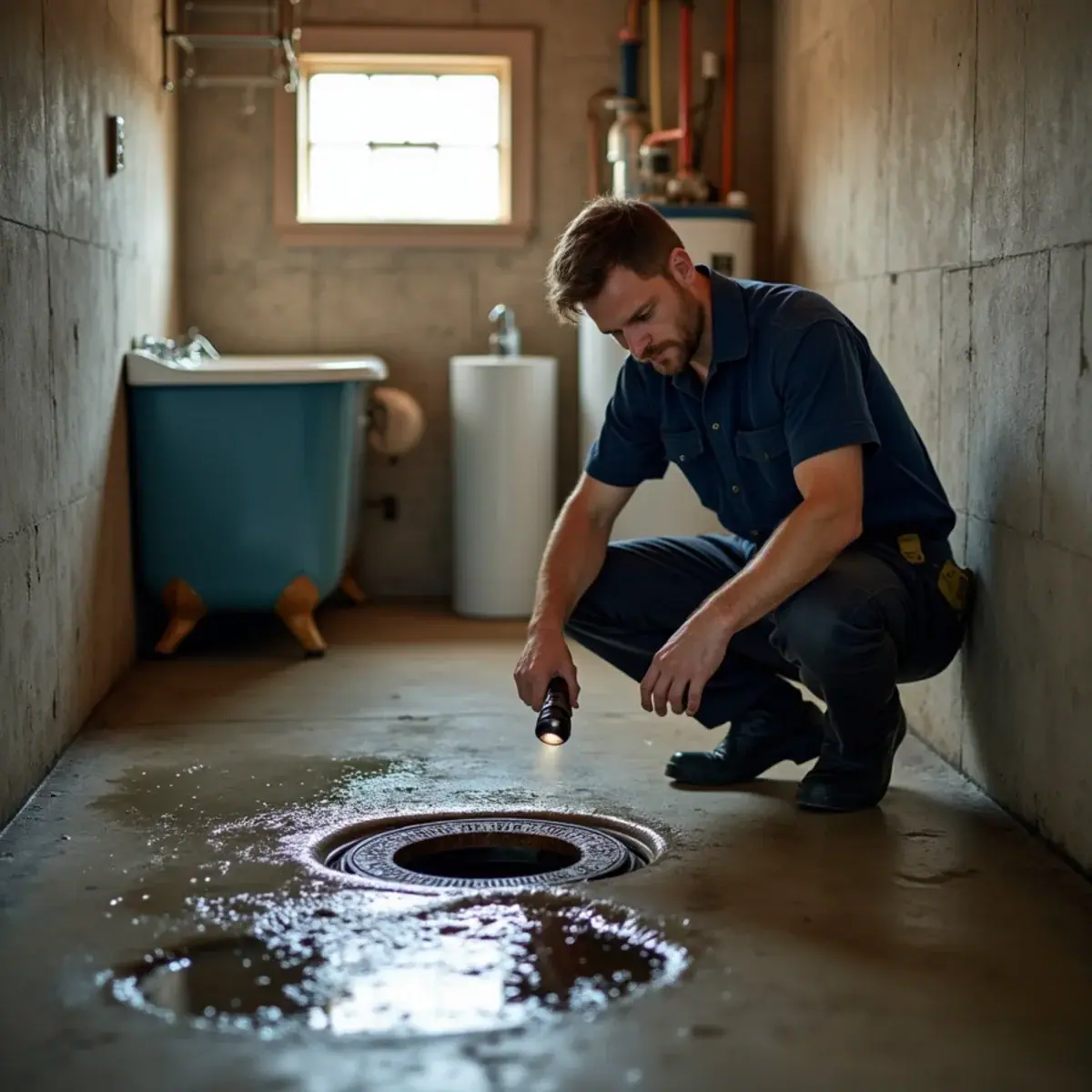
- Water or sewage at the basement floor drain during laundry or after several showers
- Every drain in the house slowing at once, not just one sink
- A clog that returns on a predictable cycle, often worse in late summer and fall when roots are most active
- A sewer smell near the floor drain or the cleanout
If water is already coming up the floor drain, stop running water in the house and follow our guide on what to do when sewage backs up into the basement.
Rod it, line it or replace it: comparing the options
| Option | What it does | Best for | Limits |
|---|---|---|---|
| Power rodding | A cutting head clears roots back to the pipe wall | Round, aligned pipe with minor root entry | Roots regrow through the same joints |
| Hydro jetting | High-pressure water cuts roots and scours grease | Thin roots, grease and scale | Can worsen a fragile or broken pipe |
| Pipe lining (CIPP) | A resin liner cures inside the old pipe, sealing the joints | Leaking joints, cracks, pipe that still holds its shape | Not for collapsed pipe or major sags |
| Spot repair | One bad section is dug up and replaced | Damage in one place, such as a single broken joint | Other old joints remain |
| Full replacement | New PVC pipe by open trench or pipe bursting | Collapsed, crushed or badly offset clay | Most disruptive; parkway and permit work |
When rodding on a schedule is enough
If the camera shows round pipe, joints that line up and roots entering at only a few spots, rodding every 12 to 24 months can keep the line flowing for years. Our drain cleaning and sewer rodding service handles this routine work, and the plumber can suggest an interval based on how quickly the roots came back last time. Many owners book it ahead of the wet season; our spring storm basement checklist shows where it fits.
When lining is worth it
Cured-in-place lining creates a seamless pipe inside the clay, so roots have no joint to enter. It suits laterals under mature trees, driveways or finished landscaping. The pipe has to be cleaned first and must still be mostly round, since a liner follows the shape it is given.
When replacement is the only real fix
Crushed pipe, a joint offset so badly the camera cannot pass, or a sag that holds standing water cannot be rodded or lined reliably. That calls for sewer line repair or replacement, either as a spot repair or a new lateral in PVC.
What the sewer camera inspection shows
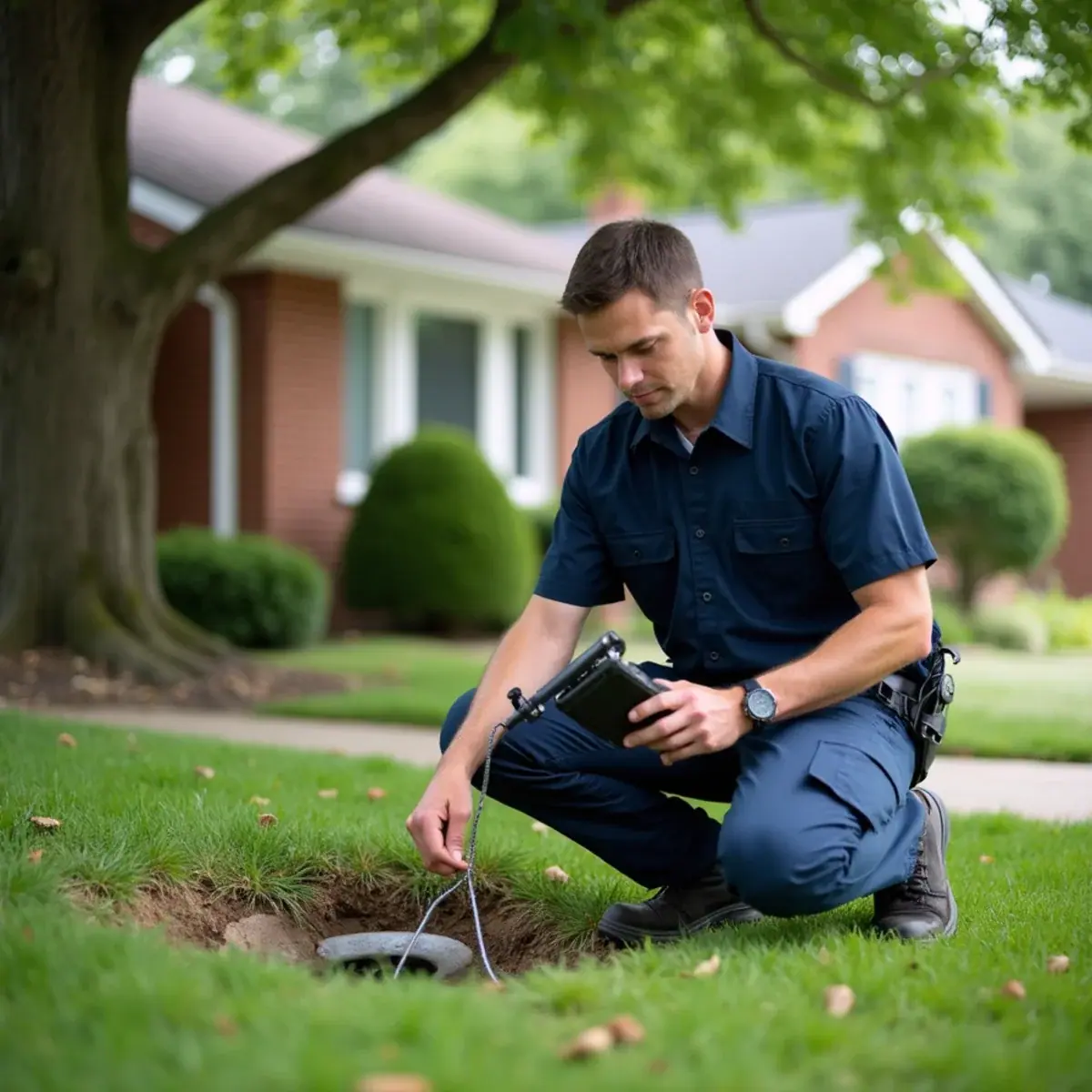
A camera run from the cleanout or a pulled toilet shows the pipe material, the depth and distance to each problem, root entry points, cracks, offsets and bellies. Ask for the recording. It is the evidence you need to compare repair options, and it helps if you ever need to document a problem for a village program or a homeowners insurance claim for sewer backup.
Reading the roots on the footage
Inspectors who code sewer video to the NASSCO PACP standard record two things about roots: their size (fine, medium, ball, or a single thick tap root) and where they enter. Together those tell you what the roots mean.
- Fine strands at a joint: early intrusion through an open joint. Rodding on a schedule usually keeps up with it.
- A root ball filling the pipe: the camera cannot judge the clay behind it, so cut it out and run the camera again.
- Roots through the pipe wall between joints: the clay itself has cracked. That is a repair, not a rodding schedule.
- Roots at the connection to the main: note the footage reading, because that end of the line often sits under the street.
- Roots mixed with soil or clay fragments: the joint is open enough to let ground in, and a void may be forming around the pipe.
About chemical root killers
Foaming root treatments can slow regrowth after rodding, but they do not repair cracked joints, and some products are not meant for every pipe or septic setup. Follow the label and ask the plumber before using one. Dead roots still have to be cut out, and no foam fixes an offset or a sag, so treating an uninspected line can hide a crack until the pipe gives way.
Old clay laterals in Villa Park and Glen Ellyn homes
Villa Park's original 1908 and 1910 subdivisions along today's Illinois Prairie Path, and the post-war ranches that filled in around them, sit on clay laterals under decades-old parkway trees. Many of those homes have been rodded more times than the owners can count.
The pattern is even stronger in Glen Ellyn's wooded neighborhoods around Lake Ellyn, where mature trees crowd old laterals on hilly lots. Owners there often choose lining over repeated rodding to protect the landscaping.
Villa Park homeowners should also look at the village's Home Flood Prevention Reimbursement Program. One tier covers building sewer work, including sanitary lateral replacement, at 50% of the lowest qualified estimate up to $3,500 per application. Check current terms, confirm eligibility with Public Works and apply before starting work. Our overview of the Villa Park flood prevention reimbursement walks through the tiers. For root problems the village policy draws a clear line: rodding and root cutting count as routine maintenance and are not reimbursed, while replacing or lining the lateral can qualify. If the same address comes back for another repair under the program, the owner has to replace the rest of the building sewer, so fix the whole problem the first time.
Parkway trees and your lateral: who handles what in Villa Park
The tree and the pipe usually have different owners. Villa Park's Forestry Division, part of Public Works, maintains the village's public trees, roughly 10,000 of them in parkways, including trimming and tree and stump removal. In most DuPage County towns the homeowner owns the lateral out to the village main; confirm Villa Park's policy for your address.
So leave the parkway tree to the village. If the camera shows its roots in your line, give Public Works the footage reading and location, and let your plumber handle the pipe. Neighboring towns split it differently: in Lombard, a village representative must witness the rodding before the village helps on its side of the line, as our Lombard plumbing page explains.
What affects the cost of fixing a root-filled sewer
- Whether there is an accessible cleanout, or one needs to be added
- Length and depth of the lateral, and how far the damage is from the house
- Whether the dig is in the yard, under a driveway or in the parkway, which needs a village permit
- Pipe condition: lining needs a mostly round pipe, replacement does not
- Tree protection and restoring lawn, walks or pavement afterward
The plumber prices the job on site, after the camera inspection and before any work starts.
Questions we hear about this
How long does a root-filled clay line stay clear after rodding?
Most root-prone clay laterals need rodding every 12 to 24 months, but the right interval is whatever keeps you ahead of the last backup. If roots return in under a year, or the camera shows cracked joints spreading, lining or replacement usually costs less over time than repeated emergency calls.
Can a clay sewer line be lined if it is already broken?
Only if it still holds its shape. Lining can bridge cracks, missing chips and leaking joints, but a collapsed section, a badly offset joint or a sag that holds water has to be dug up and replaced first. Many laterals end up with a spot repair plus a liner over the rest.
Will cutting down the tree stop roots in my sewer?
Not right away. Existing roots in the pipe keep growing for a while and then rot, leaving debris that still catches waste. Removing a parkway tree also usually needs village approval. Fixing the joints the roots entered through is the lasting solution, whatever happens to the tree.
Can a foaming root killer replace rodding?
No. A foam can slow regrowth in a line that was just rodded, but it acts on the roots, not the pipe, and dead roots still have to be cut out before water flows freely. It does nothing for a crack, an offset joint or a sag. Use it only as the label directs, and only after a camera has shown the pipe is worth maintaining.
Who handles a Villa Park parkway tree whose roots are in my sewer line?
The village handles the tree and you handle the pipe. Villa Park's Forestry Division looks after parkway trees, including trimming and removal, so give Public Works the camera findings instead of cutting the tree yourself. The lateral is usually yours to repair out to the village main; confirm Villa Park's policy for your address.